
Brown Recluse Range Expansion and Climate Factors
Climate change is driving measurable northward expansion of brown recluse spider populations, with established populations now documented in states previously considered outside their native range. Traditionally confined to the south-central United States, these medically significant spiders are adapting to warmer winter temperatures and extended growing seasons in northern regions. Recent distribution studies reveal concerning patterns that affect public health planning, medical preparedness, and homeowner awareness in newly affected areas.
Historical Range Versus Current Distribution
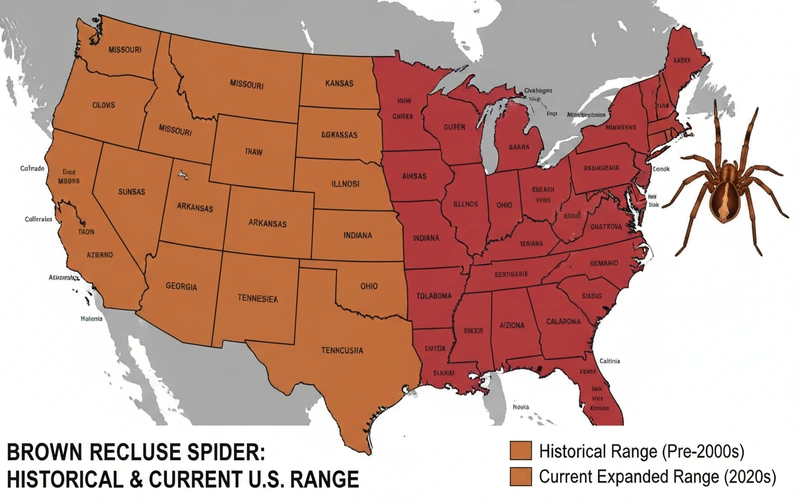
Brown recluse spiders historically inhabited a core range spanning from Texas to Georgia and north to southern Iowa. Recent surveys document established breeding populations in southern Illinois, Indiana, Ohio, and even isolated populations in Pennsylvania. Winter temperature minimums traditionally limited northern expansion, but consecutive mild winters have enabled overwintering success in previously inhospitable climates.
| Region | Historical Status | Current Status |
|---|---|---|
| Core Range (TX-TN-GA) | Dense populations | Stable high density |
| Midwest Border (IL-IN-OH) | Rare/absent pre-1990 | Established populations |
| Northern Border States | No established populations | Isolated breeding colonies |
| Southern Canada | No documented presence | First specimens reported 2023 |
"We are observing a clear correlation between warming winter temperatures and brown recluse establishment in areas that were climatically unsuitable just two decades ago. This trend will likely continue as climate patterns shift." - Dr. Anders Nielsen, Lead Arachnologist
Climate Factors Driving Expansion
Multiple climate variables contribute to brown recluse range expansion. Average winter temperatures above -7°C allow successful overwintering, while extended frost-free periods enable longer reproductive seasons and additional generations per year. Urban heat island effects create particularly favorable microclimates in cities at the northern edge of the expanding range.
- Winter survival rates increase dramatically when minimum temperatures remain above -10°C for consecutive years
- Heated buildings provide artificial climate refugia enabling populations to establish far north of outdoor survival limits
- Drought conditions in traditional ranges may drive increased human structure invasion as spiders seek moisture
- Transportation networks facilitate accidental spider dispersal in cargo and moving vehicles between regions
- Native predator populations in northern areas lack evolutionary experience with brown recluses, reducing natural population control
Public Health Implications
Range expansion necessitates updated medical protocols in newly affected regions where healthcare providers may lack experience diagnosing and treating brown recluse bites. Emergency departments in expansion zones require education on distinguishing actual bites from commonly misdiagnosed conditions like MRSA infections. Public awareness campaigns help residents in new territories recognize spiders and take appropriate precautions. Monitoring programs track population establishment to inform risk assessments and guide resource allocation for medical preparedness in vulnerable communities along the expanding range boundary.