
How to Spot a Spider and a Gambling Strategy That Will Always Pay Off
The basic idea is the same whether you're looking at a spider in your basement or making a bet at a casino: making well-informed decisions greatly lowers risk and raises the odds of success. In both situations, you need to be able to spot patterns, evaluate risks, and tell the difference between real threats and imagined dangers. There is a general truth about how people make decisions that can be seen in this comparison between spider identification and gambling strategy: knowledge turns insecurity into calculated action, fear into confidence, and random chance into strategic advantage.
Why Identifying Spiders and How to Play Gambling Stick to the Same Rules
There is more to the link between being able to spot spiders and making smart gaming choices than meets the eye. Both take careful study, the ability to see patterns, and the speed with which you can judge something when you don't have all the facts. When you see a spider, you use its body shape, color, web structure, and movement patterns to figure out how dangerous it might be. In the same way, being good at gambling means reading trends in the chances, knowing how probabilities are distributed, and knowing when to act and when to hold back.
An skilled gambler or a professional entomologist both don't go with their gut or believe in superstitions. Instead, they have made evaluation systems that encourage logical thought and discourage emotional reactions. A brown recluse spider is dangerous not because it looks scary, but because of how its body is built and what it puts in its venom. Also, a bet is smart not because it feels lucky, but because the scientific odds make the risk worth it compared to the possible payoff.

The Benefits of Pattern Recognition
Pattern recognition is the key to being good at both of these things. Experts in spider recognition can quickly put thousands of species into groups based on small changes in how long the legs are compared to the bodies, how the eyes are arranged, and the marks on the abdomen. This database of visual information grows through repeated contact and careful study. In the same way, systems like win beatz stress how important it is to understand how games work, how payouts work, and how chance curves work before putting money into them. A gambler who can spot trends in the way cards are dealt, how roulette wheels work, or how slot machines work has a big edge over someone who just plays without thinking.
It takes time, patience, and conscious practice to become good at recognizing patterns. Entomologists spend years learning about spider taxonomy and making mental lists of traits that help them spot spiders. Successful players put the same amount of time and effort into learning about game theory, managing their funds, and statistics. Both groups know that having too much information can lead to dangerous overconfidence, while having deep experience leads to consistent, reliable results.
Real Threats vs. Myths About Venomous Spiders and Gambling Risk
People consistently overestimate the risks of both spiders and gaming, which causes needless fear that gets in the way of making smart decisions. There are about 45,000 kinds of spiders in the world, but only about 30 are seriously harmful to people. Still, about 15% of people are afraid of spiders. This is mostly because of false information and sensationalized news stories. The same thing happens when people talk about gambling: scary stories about addiction and losing all your money cast a shadow over the millions of people who gamble safely for fun.
To understand real risk, you need to separate scientific facts from personal stories. Even though they have a scary image, black widow spiders rarely kill people in modern medicine. Even though brown recluse bites are very painful, they don't happen as often as popular culture makes it seem. Most spider bites cause small, localized effects that are similar to bee stings. In the same way, sensible gambling with a plan for your money and reasonable goals comes with manageable risks for people who know what they're doing.

Figuring Out Which Encounters Are Really Dangerous and Which Are Not
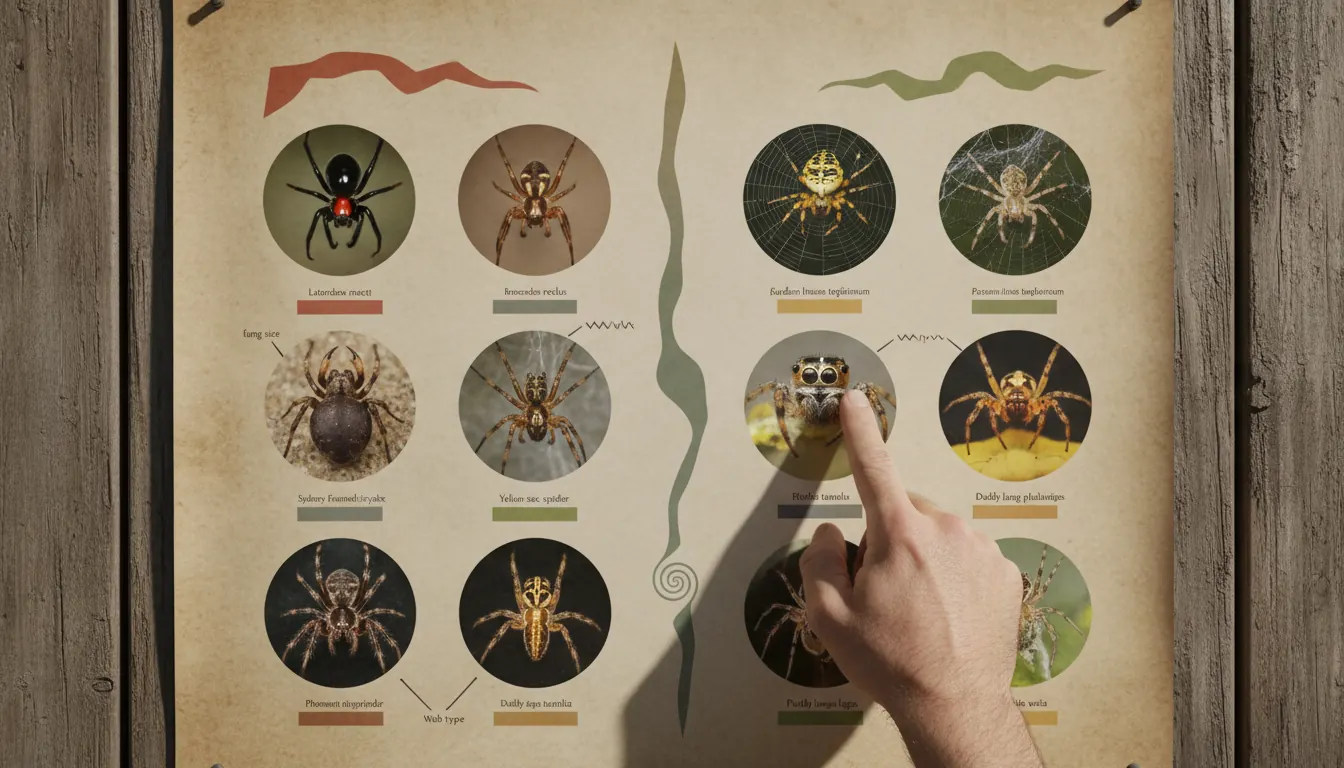
| Spider Species | Real Level of Risk | Common Misconception | Identification Key |
|---|---|---|---|
| Black Widow | Mild—painful but not usually fatal | Very dangerous | A red oval shape on the stomach |
| Brown Recluse | Moderate; necrotizing cuts may happen | Always leads to bad tissue harm | Mark in the shape of a violin on the cephalothorax |
| Wolf Spider | Very low, safe bite | Size makes it dangerous | Has a big, hairy look and a unique eye pattern |
| Common House Spider | Negligible—basically safe | All house spiders bite a lot | Small, makes webs that get caught in corners |
The analytical mind-set needed for gambling strategy is similar to the way this data-driven method to spider identification works. To understand real chance and outcome, you have to look past what things seem like on the surface and cultural stories. A big, scary spider might not be dangerous at all, but a small, ordinary spider might need to be avoided. In the same way, flashy slot machines with lots of pictures don't always have better chances than simpler games with clear ways to win.
"Being brave isn't what makes someone an expert; being able to accurately judge risk based on facts rather than feelings is. Whether you're dealing with bugs or betting, knowing something takes away the numbing effect of false fear." — Dr. Sarah Mitchell, Behavioral Risk Analyst
Spider Identification Charts and Learning to Read the Patterns in Casino Odds
Spider recognition charts make it easy to put specimens into groups based on what can be seen about them. These visual guides set up information in a hierarchy and let users narrow down their choices by asking yes or no questions about physical traits. The method uses the same kind of logical structure as decision trees for gaming strategy. At each choice point, you learn more about the best thing to do.
Professional recognition charts have a lot of information on them, like where the animals live, what habitats they like, how they build their webs, and details about their bodies. This multidimensional method keeps people from being mistakenly identified by a single trait. A spider might look like a dangerous species in terms of color, but its eyes or legs might not be arranged the same way or be the right size. These are details that become clear with the right training and reference materials.

Putting Together Your Own Memory Aid

Making a personal reference system for spider identification is a lot like making a framework for a gaming strategy. For both, you need to organize information in ways that make it easy to find and use and help you make quick decisions when you're under a lot of stress. Naturalists with a lot of experience write down observations about specific places and species that are seen in certain environments at certain times of the year in field notes. In the same way, great gamblers keep thorough records of how they do in different games to see which strategies consistently produce the best results.
- Keeping careful records of body size, color, markings, and behavioral traits
- Take note of things like the website's address, the time of day it was seen, and seasonal trends
- Check more than one source of identification to be sure you have identified the species beyond a reasonable doubt
- Write down the spot because the distribution of spider species changes a lot from region to region
- If you can, take pictures of the examples so that you can check them later and compare them with identification tools
- Keep track of wrong identifications to learn from common mistakes and make future attempts more accurate
- Familiarize yourself by being exposed to it many times in controlled training settings before using it in the field
Spider identification becomes a reliable skill with this organized method, not just guessing. The same methodical paperwork can improve gambling results by showing trends in how people make decisions, drawing attention to winning strategies, and spotting costly mistakes before they get worse.
Spider Bite Identification and Making Smart Decisions
Spider bite identification can be hard because the signs often look like other health problems, and a lot of people never see the spider that bit them. This diagnostic confusion calls for a measured reaction that strikes a balance between caution and logic—the same way of thinking that is needed to make smart gambling choices. In both cases, jumping to strong opinions based on little information leads to bad results.
Doctors stress that most bites people think they got from spiders are actually caused by bugs, allergies, or bites from other arthropods. The skin mark that was thought to be caused by a brown recluse spider could actually be caused by a staph infection, which needs a completely different treatment. This diagnostic difficulty is like losing at gaming, where it feels like bad luck but is actually due to bad strategy or bad bankroll management.

How to Respond in Uncertain Situations
Instead of freaking out when you think you might have been bitten by a spider, you should carefully observe the situation. Clean the area, put ice on it to reduce swelling, and keep an eye on how the symptoms get worse. If your symptoms get worse, you should see a doctor, but know that most bites heal on their own. This measured approach—getting information, giving basic first aid, and stepping up the reaction only when there is reason to be worried—can be used as a model for making choices about gambling.
- Take an objective look at the situation by writing down any obvious signs without drawing the worst possible conclusions right away
- Clean up and cool down the damaged area right away as a low-risk measure
- Instead of making choices based on how you felt at first, keep an eye on how things are going over time
- Know when your experience goes beyond what you know and get a professional medical review
- Do not escalate things dramatically unless there is clear evidence of major problems
- Learn from each event to get better at identifying people and responding to them in the future
- Know that uncertainty is normal and doesn't mean you have to take action right away
"Most people greatly exaggerate risks they can easily imagine and greatly underestimate dangers they haven't personally encountered. To handle risks well in any area, you need to base your reaction on probability instead of how important it seems to you." — Marcus Chen, Risk Management Consultant

In Both Spider Identification and Gaming Knowing More Makes You Less Afraid
Fear grows when people don't understand. When you can't tell the difference between yard spiders that aren't dangerous and species that could be, every contact makes you nervous. Every bet feels like a leap into the unknown when the rules of gaming aren't clear. Knowledge doesn't get rid of risk; it puts risk in its proper context, turning vague threats into factors you can confidently handle.
Exposure to education constantly lowers irrational fear reactions. Individuals who take classes on spider identification say they feel a lot less stressed when they come across spiders in their daily lives. They don't become careless; instead, they switch from general fear to specific, necessary caution. The same thing happens to gamblers who take the time to learn about game math, chance theory, and how to handle their bankroll.
Getting Better at Things Through Structured Learning
| Learning Stage | Spider Identification | Gambling Strategy | Outcome |
|---|---|---|---|
| First Exposure | Can name two or three known dangerous species | Understands the general idea of house edge | Less fear and more care |
| Knowledge in the Middle Level | Knows 15 to 20 species and how they change in different areas | Figures out the predicted value and handles basic bankroll management | Making decisions with confidence in everyday situations |
| High Level of Competence | Identifies most species in the area and learns behavioral ecology | Knows how to play many games and can adjust to different situations | Performance based on expertise with little stress |
| Level of Expert | Helps with identity records and teaches others | Creates unique tactics and notices small changes in patterns | Risk stops being an emotional cause and starts being a measured variable |
In both fields, the path from beginner to master follows a similar pattern. When you are young, you learn to avoid making terrible mistakes like touching widow spiders and betting more than you can afford to lose. Intermediate understanding adds complexity and the ability to make decisions based on the situation. Advanced competence lets you use a proactive approach instead of a cautious reflexive one. In the end, experts acquire intuition that comes from deeply internalized pattern awareness instead of conscious math.
Confidence that comes from knowing something is very different from fake confidence that comes from not knowing something. Overconfidence can be dangerous for someone who thinks all bugs are safe. Someone who gambles and thinks they've found a "system" to beat the house edge is also acting recklessly. Real confidence comes from knowing your strengths and weaknesses, as well as the real risks you face without letting them stop you.
Conclusion
A basic truth about human decision-making is revealed by the comparison between spider identification and gambling strategy: knowledge turns fear into a strategic edge. Pattern recognition, chance analysis, and mental control are all important for figuring out how dangerous a spider is or how much a bet is likely to pay off. Systematic study is rewarded over superstition in both areas, as is careful observation over rash response, and measured confidence over reckless boasting. By using the same analytical models to problems that don't seem to be connected, you learn skills that can be used anywhere where risk and uncertainty are present.